
A1 AUTOTRONICS
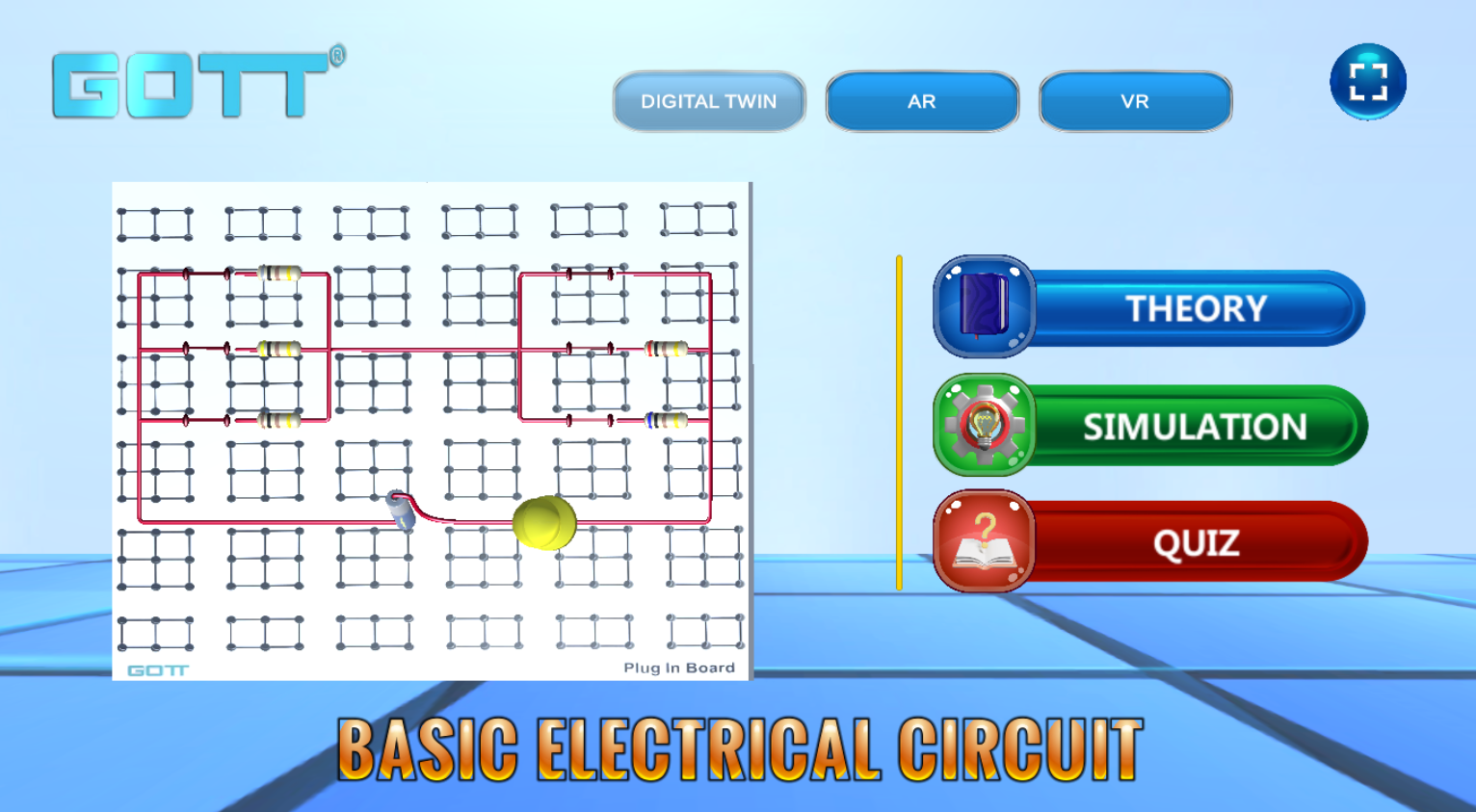
BASIC ELECTRICAL CIRCUIT
Learn the fundamentals of electrical circuits through an interactive environment that allows users to build and analyze basic circuit configurations. Explore how components such as batteries, resistors, wires, and lamps work together to create a complete circuit, while observing the effects of different circuit arrangements on current flow and circuit behavior. This module combines theory, simulation, and assessment to strengthen understanding of essential electrical concepts.
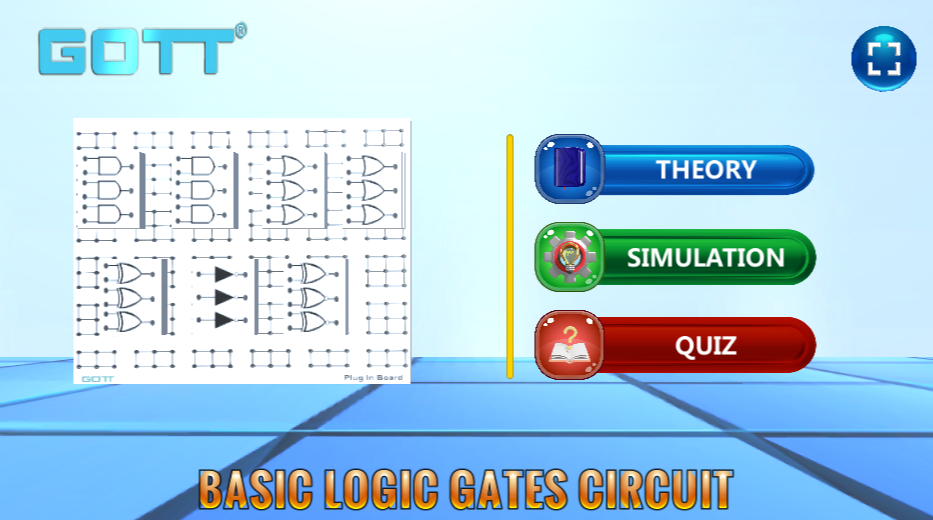
BASIC LOGIC GATES CIRCUIT
Learn the fundamentals of digital electronics through an interactive exploration of basic logic gates and their circuit implementations. Investigate the operation of common logic gates such as AND, OR, NOT, NAND, NOR, XOR, and XNOR, and observe how different input combinations affect output signals. This module helps students develop a strong foundation in digital logic design, Boolean operations, and the principles underlying modern electronic and computer systems.
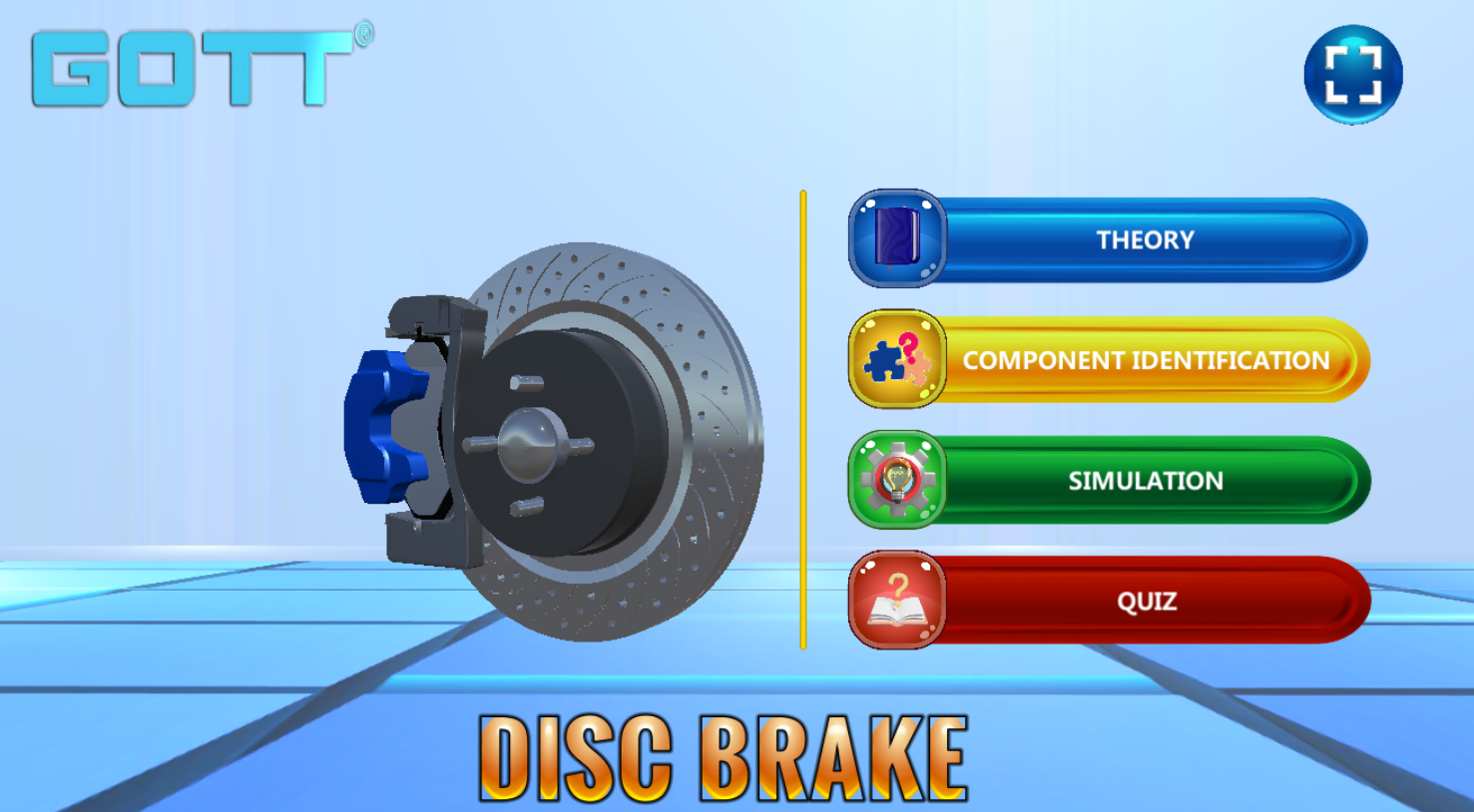
DISK BRAKE SYSTEM
An interactive learning module that explains the disc brake system used in modern vehicles. Students can explore the structure and function of key components such as the brake disc (rotor), caliper, brake pads, hub, and hydraulic mechanism. The simulation demonstrates how braking force is generated through friction between the brake pads and rotating disc, converting kinetic energy into heat to slow or stop a vehicle. It helps learners understand braking principles, friction, force transmission, heat dissipation, vehicle safety, and the operation of automotive braking systems.
A2 ELECTRICAL TECHNOLOGY
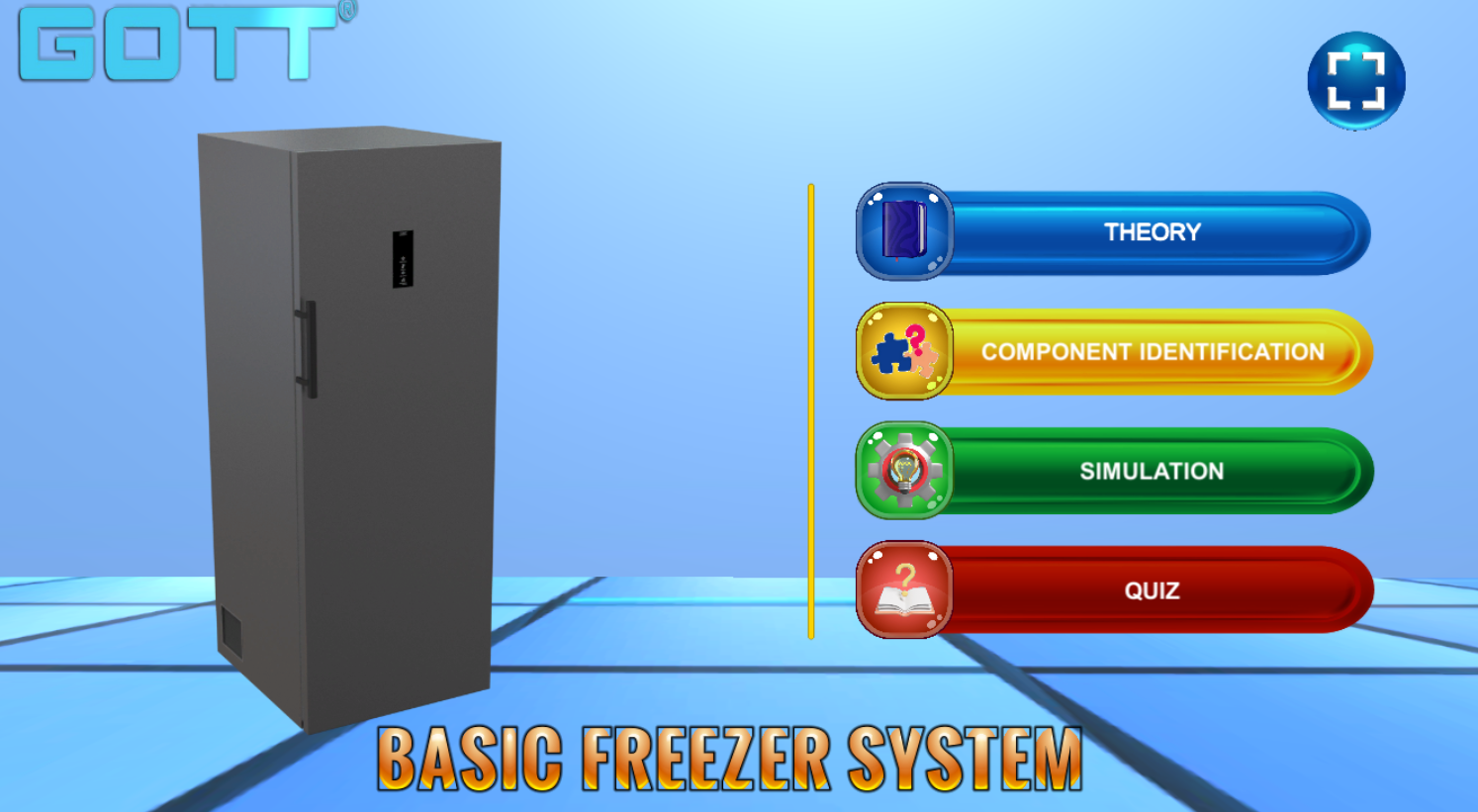
BASIC FREEZER SYSTEM
Learn the fundamentals of a Basic Freezer System through interactive theory, component identification, simulation, and quizzes. Explore the functions of key refrigeration components, understand the refrigeration cycle, and observe how cooling is produced within a freezer system. This software helps students develop practical knowledge of refrigeration principles, system operation, and basic troubleshooting skills through engaging hands-on learning activities.
A3 EV & HYBRID VEHICLE
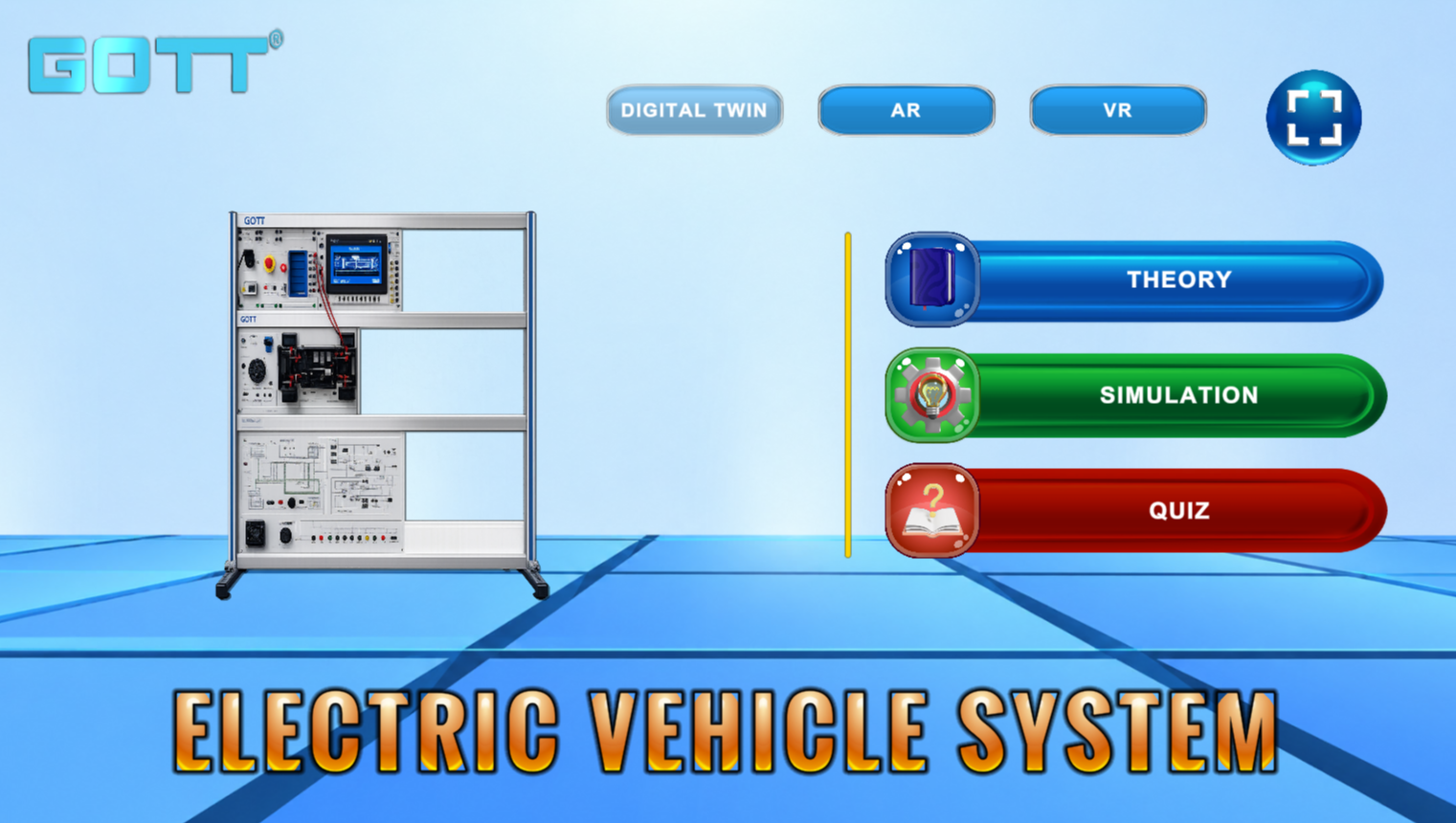
ELECTRIC VEHICLE
Electric Vehicle System is an interactive learning software developed to provide a comprehensive understanding of modern electric vehicle (EV) technology. It introduces the fundamental components of an EV, including the battery pack, electric motor, motor controller, inverter, charging system, and battery management system (BMS), while demonstrating how these components work together to power the vehicle.
Through interactive theory, virtual simulations, and quizzes, learners can explore electric powertrain architecture, energy conversion, motor control, charging principles, and vehicle operation in a safe and engaging learning environment.
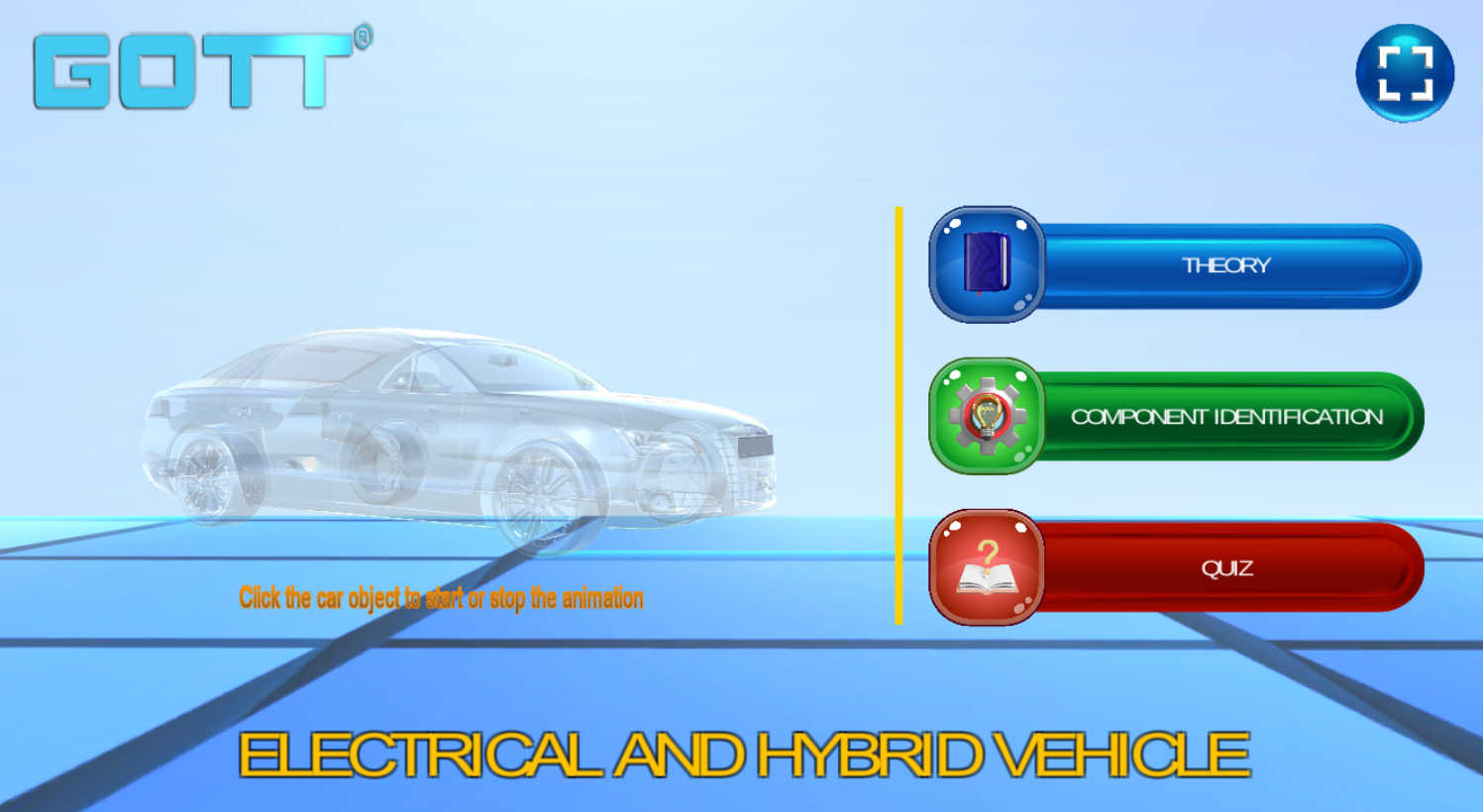
ELECTRICAL HYBRID VEHICLE
An interactive learning module that introduces the fundamentals of electric and hybrid vehicle technology. Students can explore the structure, components, and operating principles of electric vehicles (EVs) and hybrid electric vehicles (HEVs), including batteries, electric motors, power electronics, charging systems, and energy management systems. Through animations and component identification activities, learners can understand how electrical energy is converted into mechanical motion, how regenerative braking works, and how hybrid systems combine internal combustion engines with electric propulsion. The module helps develop knowledge of sustainable transportation, energy efficiency, and modern automotive technologies.
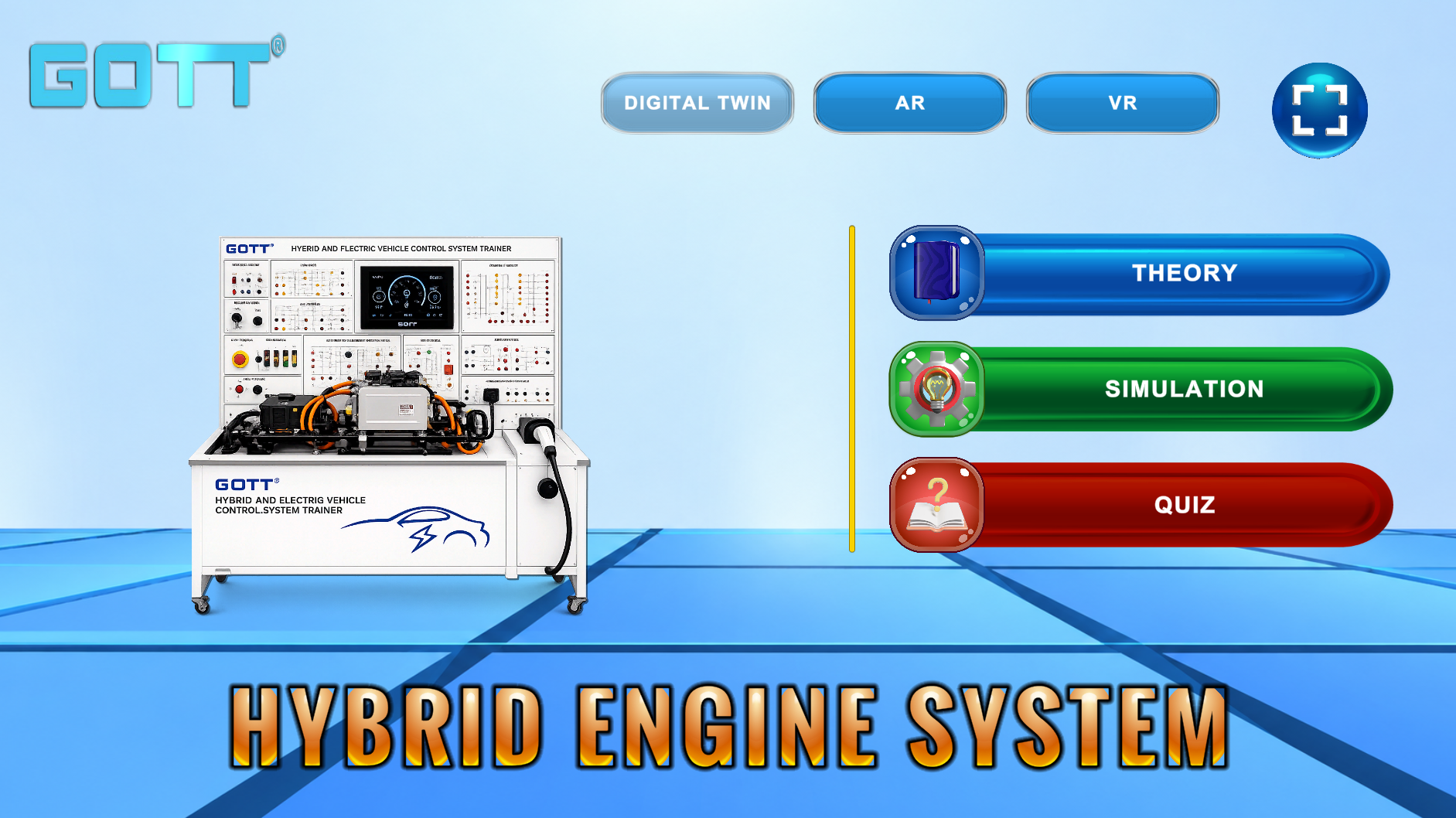
HYBRID ENGINE
Hybrid Engine System is an interactive learning software designed to help learners understand the operating principles of hybrid electric vehicles (HEVs). It explains how the internal combustion engine, electric motor, battery system, inverter, and control units work together to improve fuel efficiency, reduce emissions, and optimize vehicle performance.
Through interactive theory, simulations, and assessments, learners can explore hybrid vehicle architecture, energy management, power flow, and the operation of key electrical and mechanical components in a safe virtual environment.
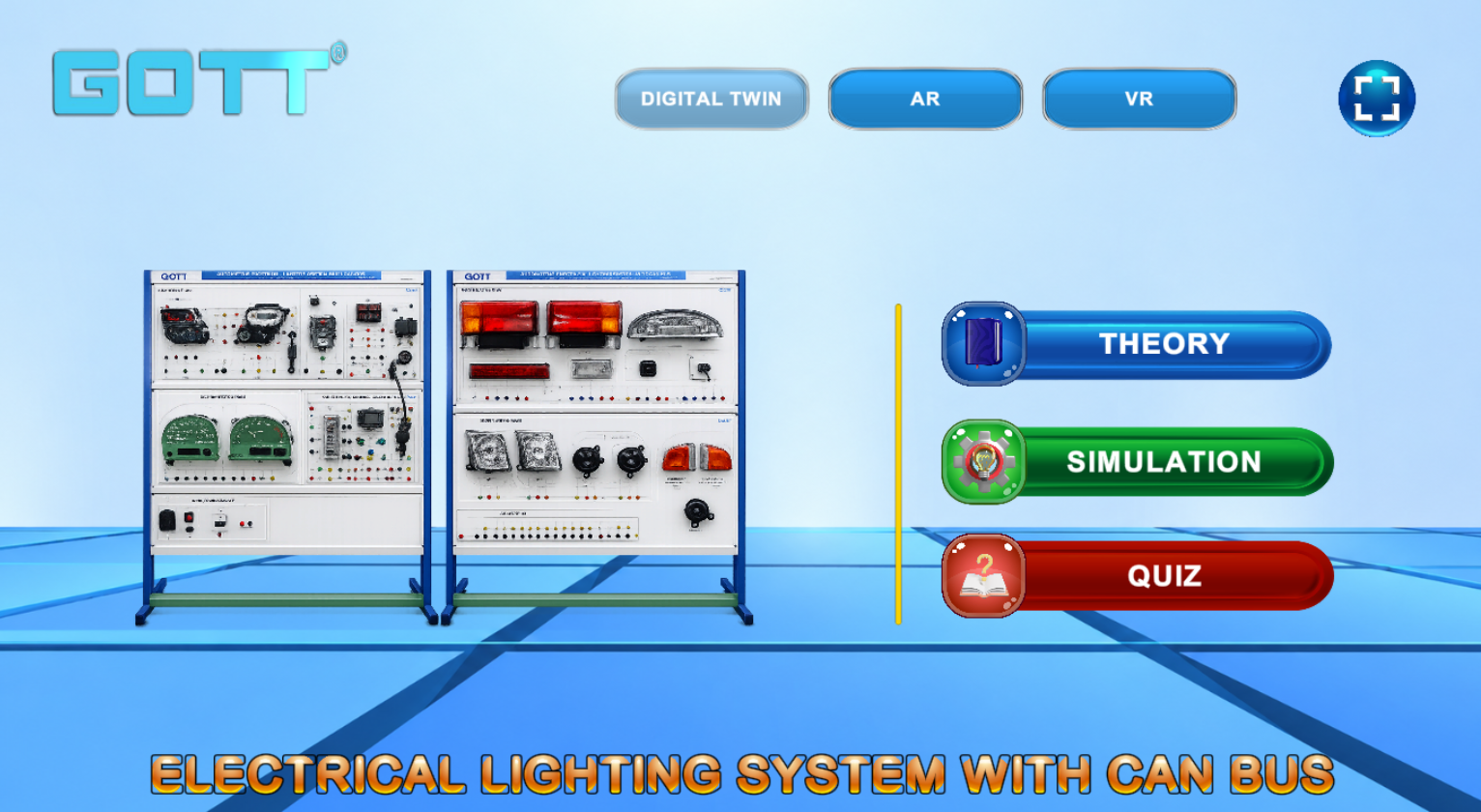
LIGHTING SYSTEM WITH CAN BUS
An interactive learning module that introduces the automotive lighting system and its role in vehicle safety and visibility. Students can explore the operation of various lighting components, including headlights, tail lights, brake lights, turn signals, hazard lights, fog lamps, and interior lighting systems. Through theory lessons and interactive simulations, learners can understand electrical circuits, lighting functions, signal operation, and lighting control mechanisms. The module helps develop knowledge of automotive electrical systems, road safety requirements, troubleshooting techniques, and the importance of proper vehicle illumination.
A4 ELECTRICAL & RENEWABLE
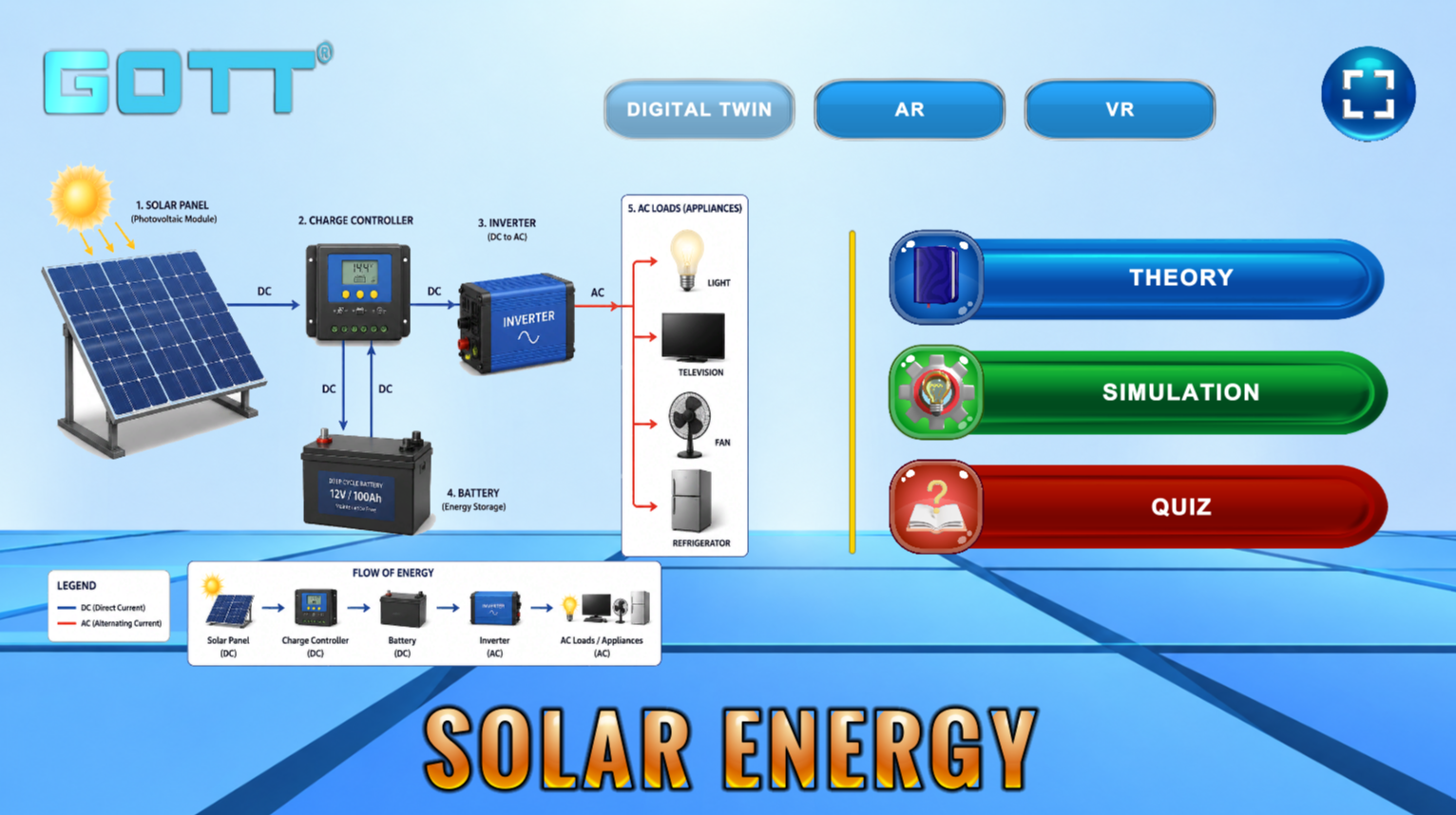
SOLAR ENERGY
Solar Energy is a renewable energy source that converts sunlight into electrical power using photovoltaic (PV) solar panels. The generated direct current (DC) electricity is regulated by a charge controller, stored in batteries for energy backup, and converted into alternating current (AC) through an inverter to power household and industrial electrical appliances.
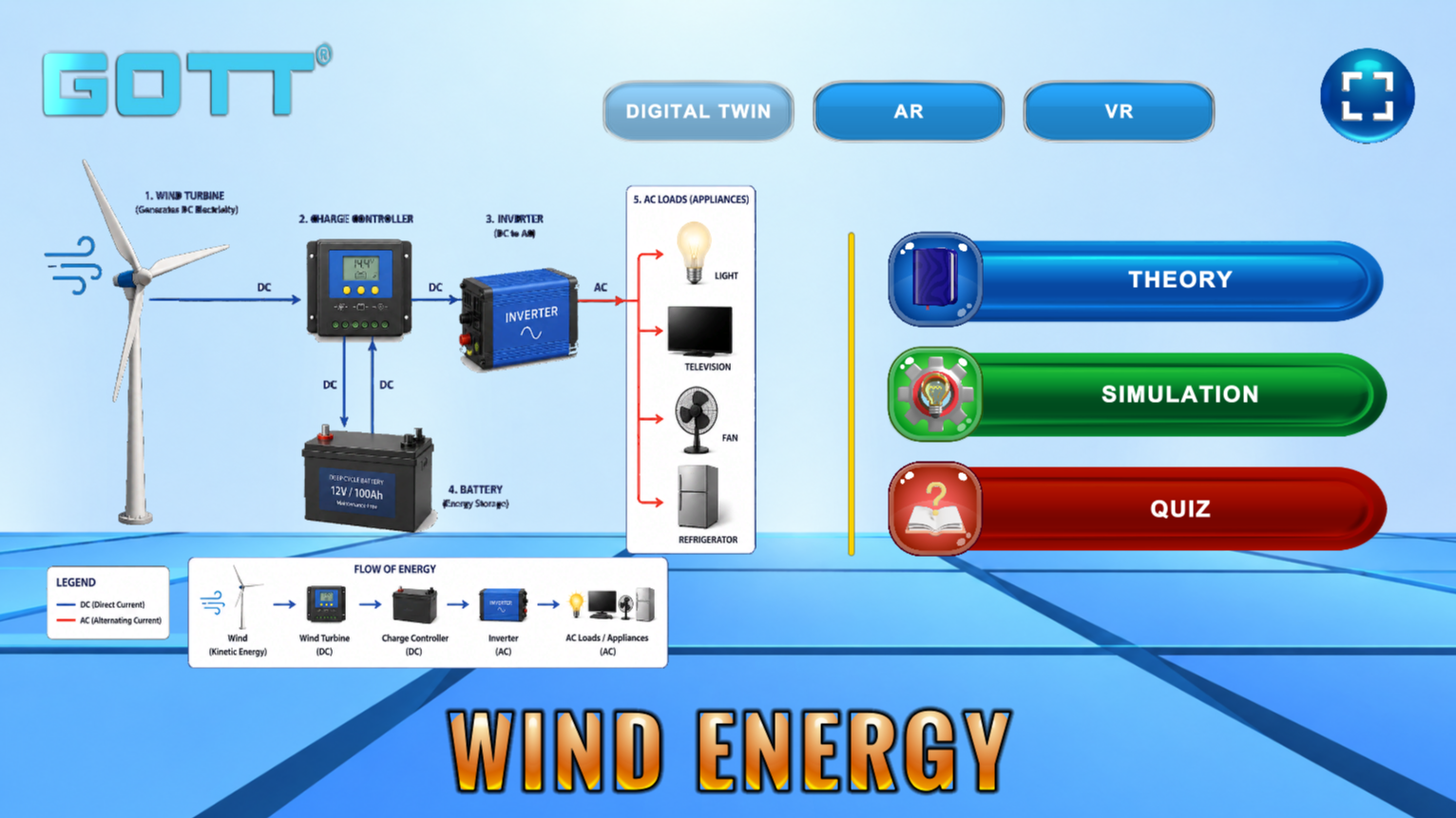
WIND ENERGY
An interactive learning module that introduces the principles and operation of wind energy systems. Students can explore how wind turbines convert the kinetic energy of moving air into electrical energy and examine the function of key components such as the wind turbine, charge controller, battery, inverter, and electrical loads. Through theory lessons and simulations, learners can understand energy conversion, power generation, energy storage, and electricity distribution in renewable energy systems. The module helps develop knowledge of sustainable energy technologies, green power generation, and the role of wind energy in reducing dependence on fossil fuels.
